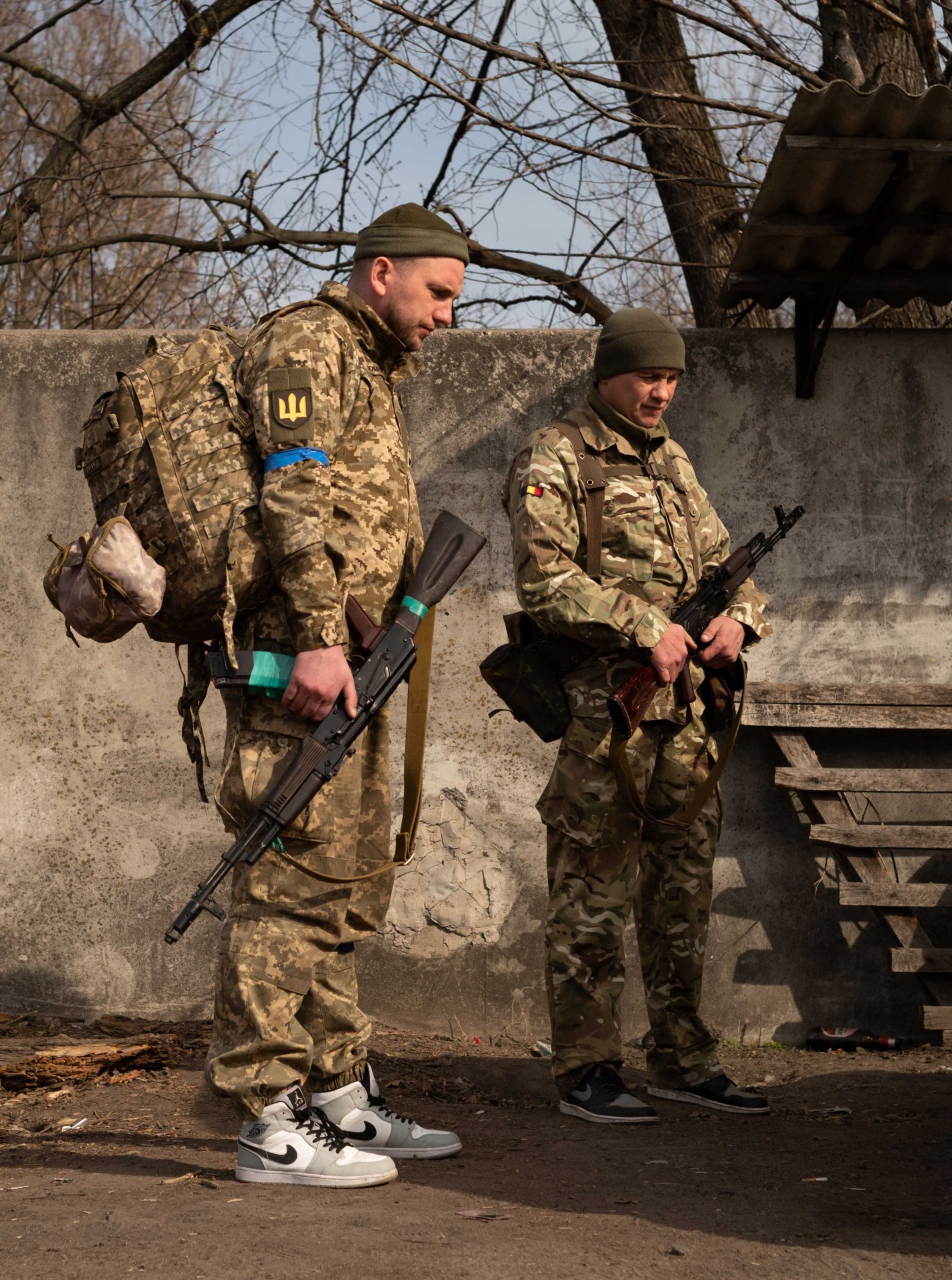
Photographer Robert Spangle is one of street style’s very best and has been contributing to our ACHTUNG website over the years. Spangle lives in California and has been a member of the US Army in a former life. His understanding of military clothing and history is unparalleled and we decided to publish this somewhat daring photo diary he has been working on during regular trips to the Ukraine in the past few months aptly titled Style and Resistance. To understand the story best, we leave it in Robert’s own words. It’s grim but also beautiful.
“I arrived in Kyiv 10 days after the start of the Russian invasion. I was there to embed with Ukranian military units as they defended themselves against and later repealed Russian forces. Regardless of that assignment I photographed everything. History was unfolding in all directions, at all times, and I was compelled to document everything. Looking back on the photographs I took, on the streets of Kyiv, or on the front lines, many images were first and foremost fashion photographs.
I am first and foremost a fashion photographer, but I didn’t expect to find a fashion narrative in Ukraine, nor did I look for one. However what I found looking back on these images was that fashion became a canvas for the historic, horrifying and often heroic times Ukranians were, and are still, living in. Clothing, even for a new refugee, represents choices, and those choices illustrate the cohesion and passion of the Ukrainians, the naive, charming embrace of young men to militarism, a yearning for normality, and above all: resilience.
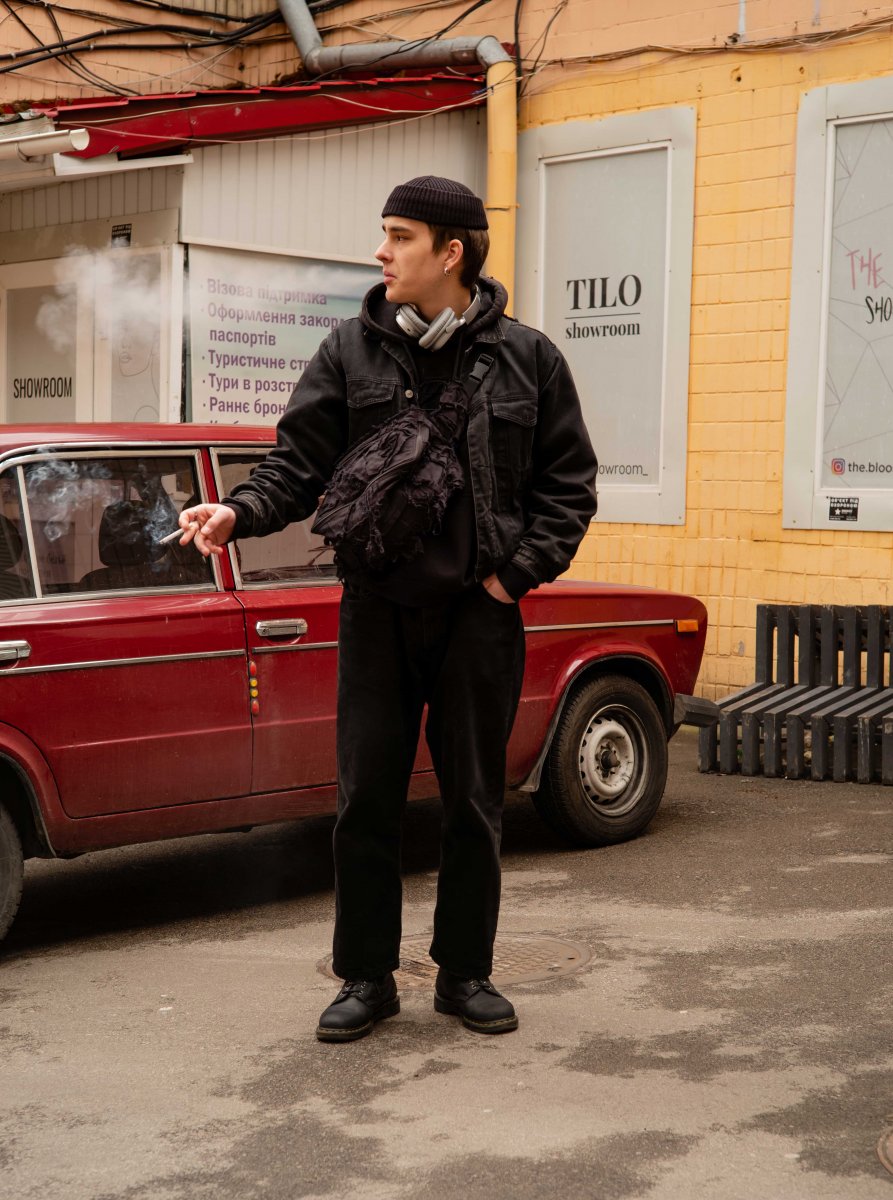
A Kyiv based designer and maker. I met him as he went out looking for more sewing materials. Since the start of the invasion he has been making vests and pouches for the military. (@descapizm)
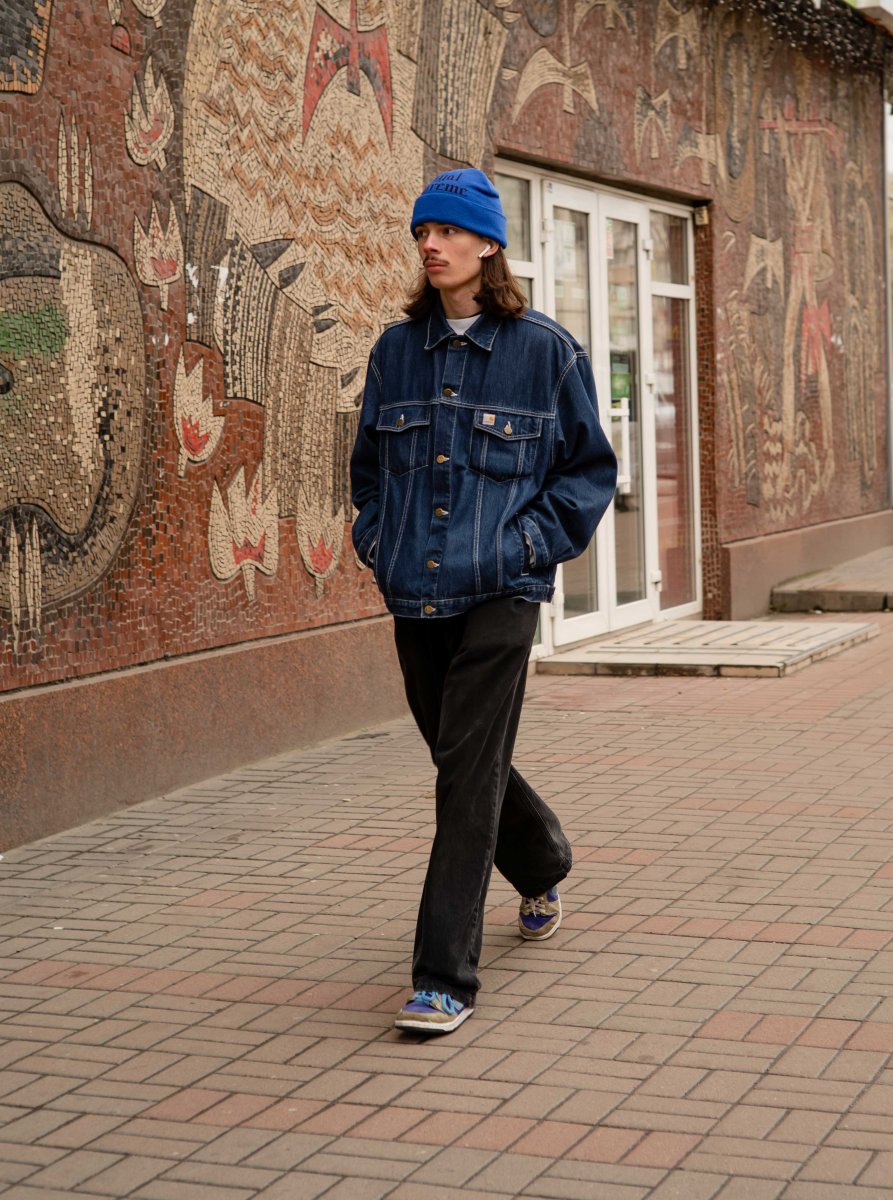
A stylish Kyiv youth passes a Soviet era Mosiac that adorns the Nike flagship store in the capital city. Locals fought to maintain the mural when Nike took over the location, despite its Soviet affiliation.
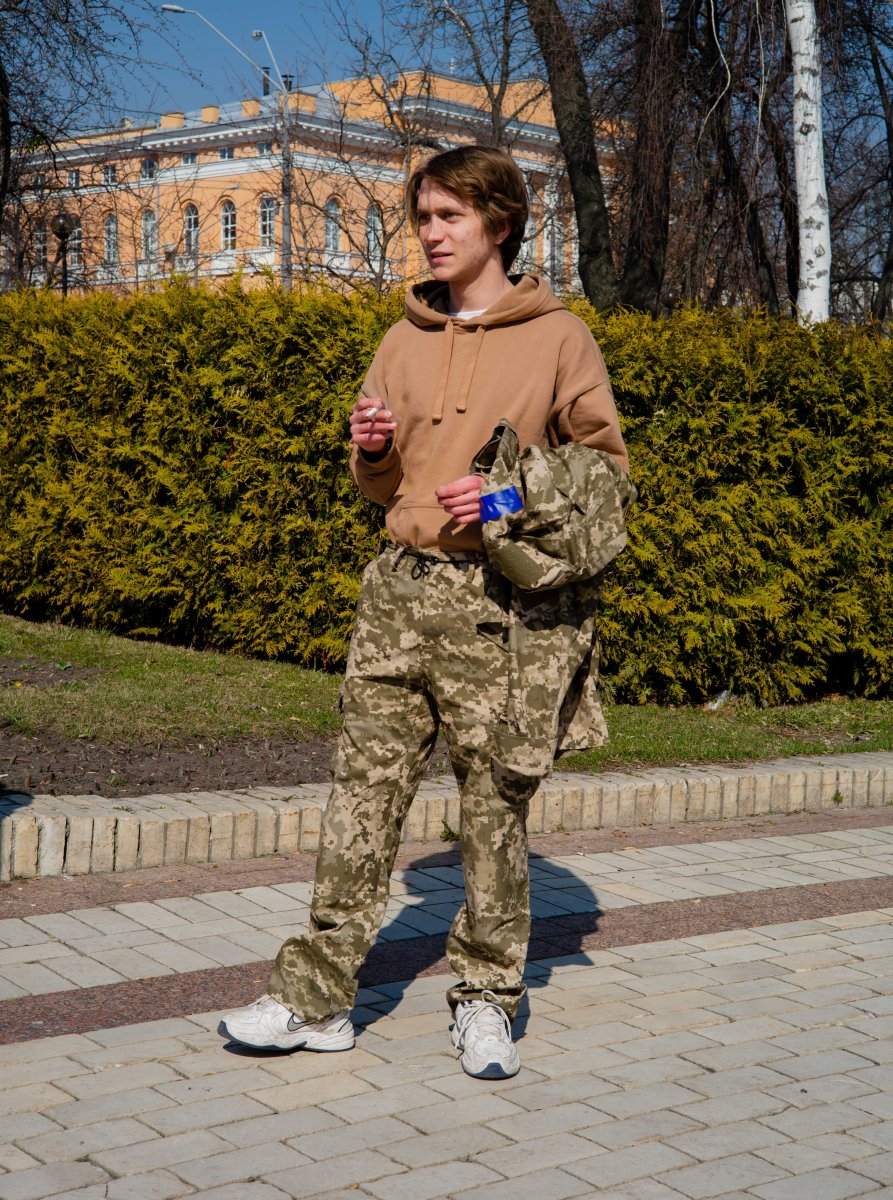
18 year old volunteer who has just been issued his first uniform. His uniform is too large and they have no boots in his size. He told me: “What kind of Army issues you a rifle but not pants that fit?” – he made a belt of shoelaces instead.
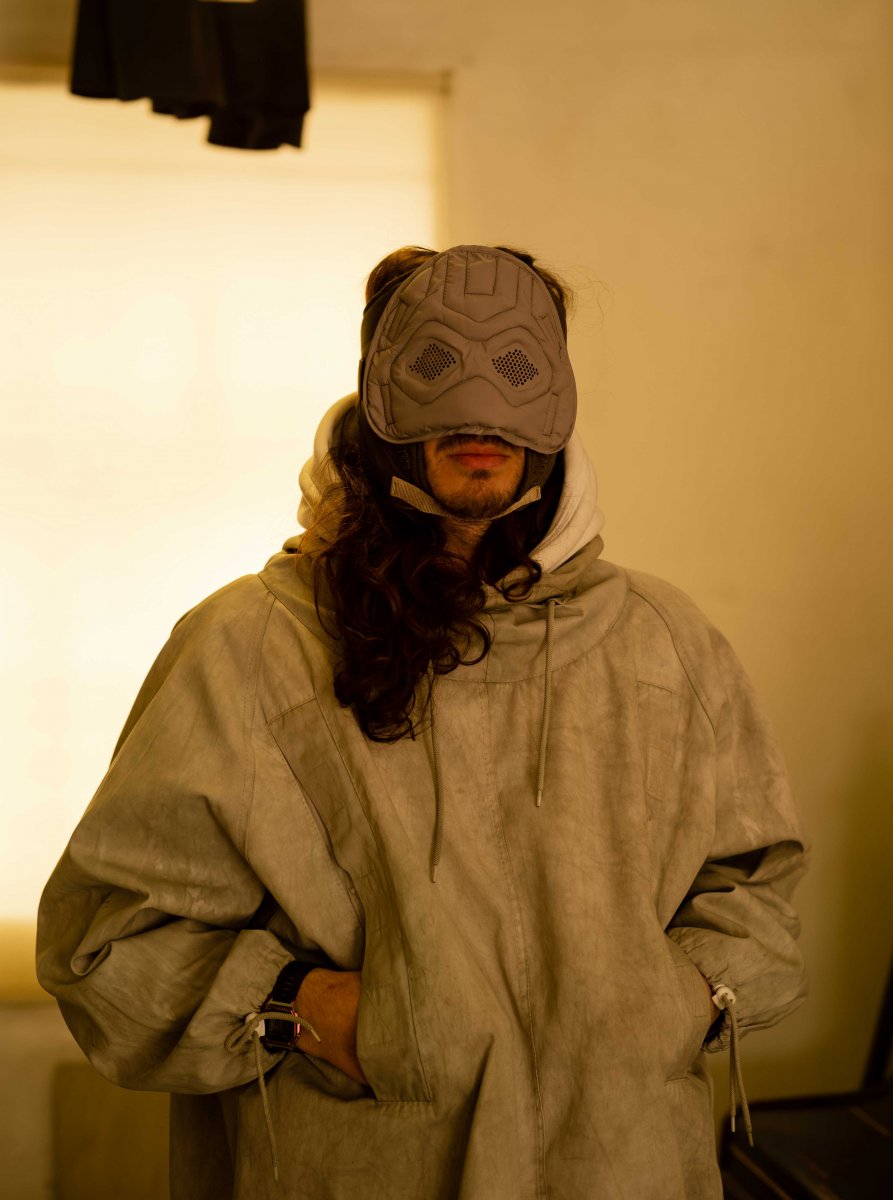
Skoshi Aatsu is a Kyiv based designer who has continued to design and make during the invasion. Turning his attention directly to the invasion he has created modular, easy to manufacture military vests and pouches, as well as worked with Ukraine’s special forces to better equip the snipers. (@_aatsu)
These photos span the first three months of the invasion, most are taken in Kyiv or the surrounding suburbs, where the war was concentrated in for the first two months. The first three weeks of the invasion were desperate, unprecedented times. Everyone expected Kyiv to be the next Sarajevo or Stalingrad. Spirits were manically high or low, everyone spent every hour preparing for the fight ahead, high on a sense of purpose, unity, and community they had never experienced before. The uniforms of the young men looked too new, and rarely fit. Couples had a sort of mad energy to them, many were married by officers, a wartime power in Ukraine. Many decided to fight together.
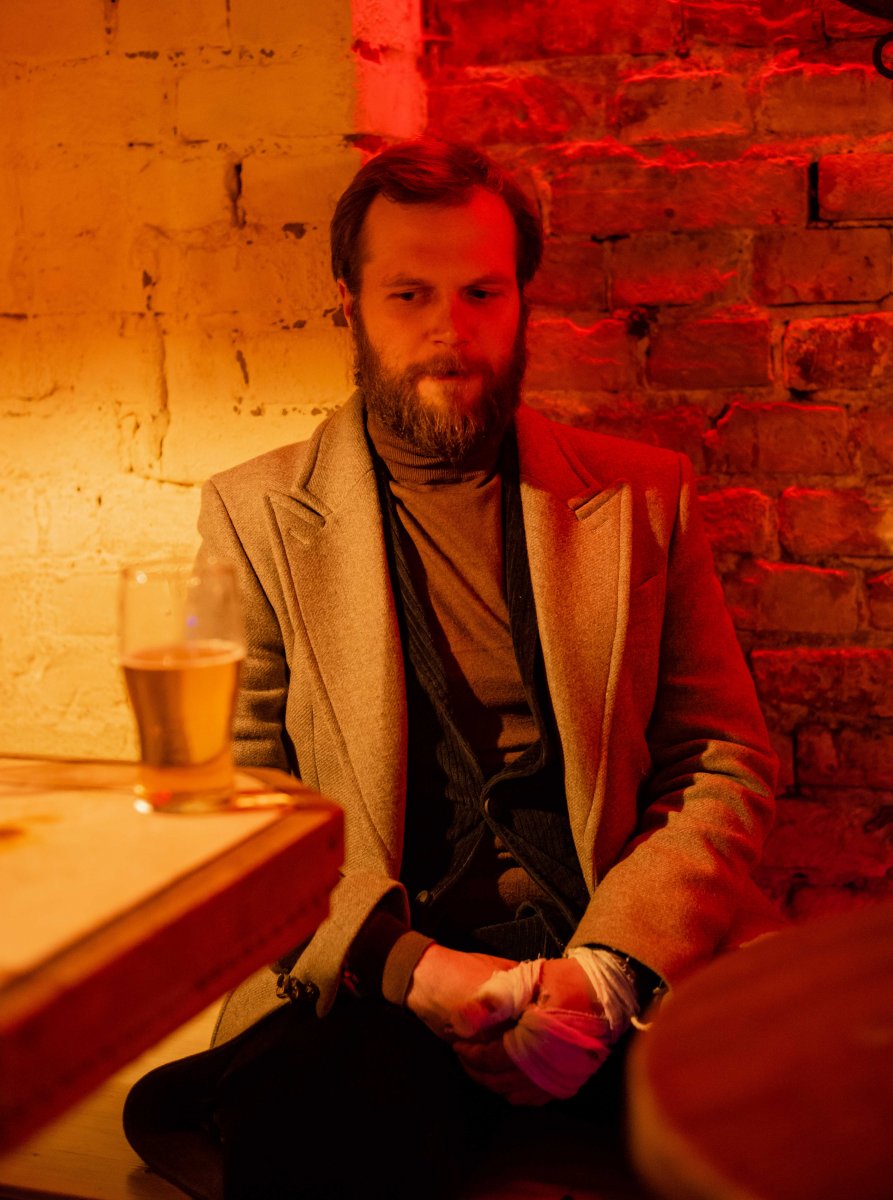
A Ukranian soldier learns to drink with his right hand after being injured by a hand grenade on his 22nd day of fighting in nearby Irpin.
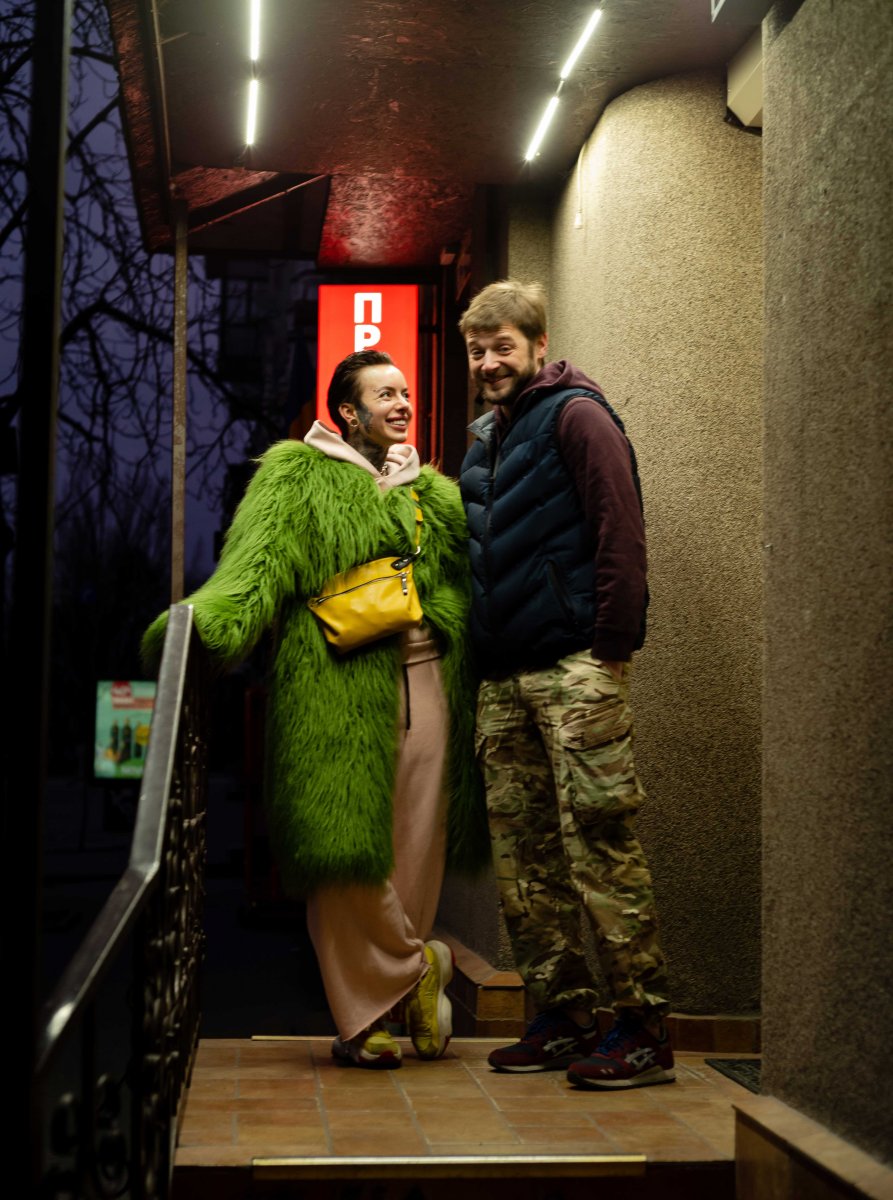
A young couple in Kyiv during the beginning of the invasion. The streets where empty. They where clearly madly in love. The woman spoke English and told me: “He is staying to fight, im staying with him”.
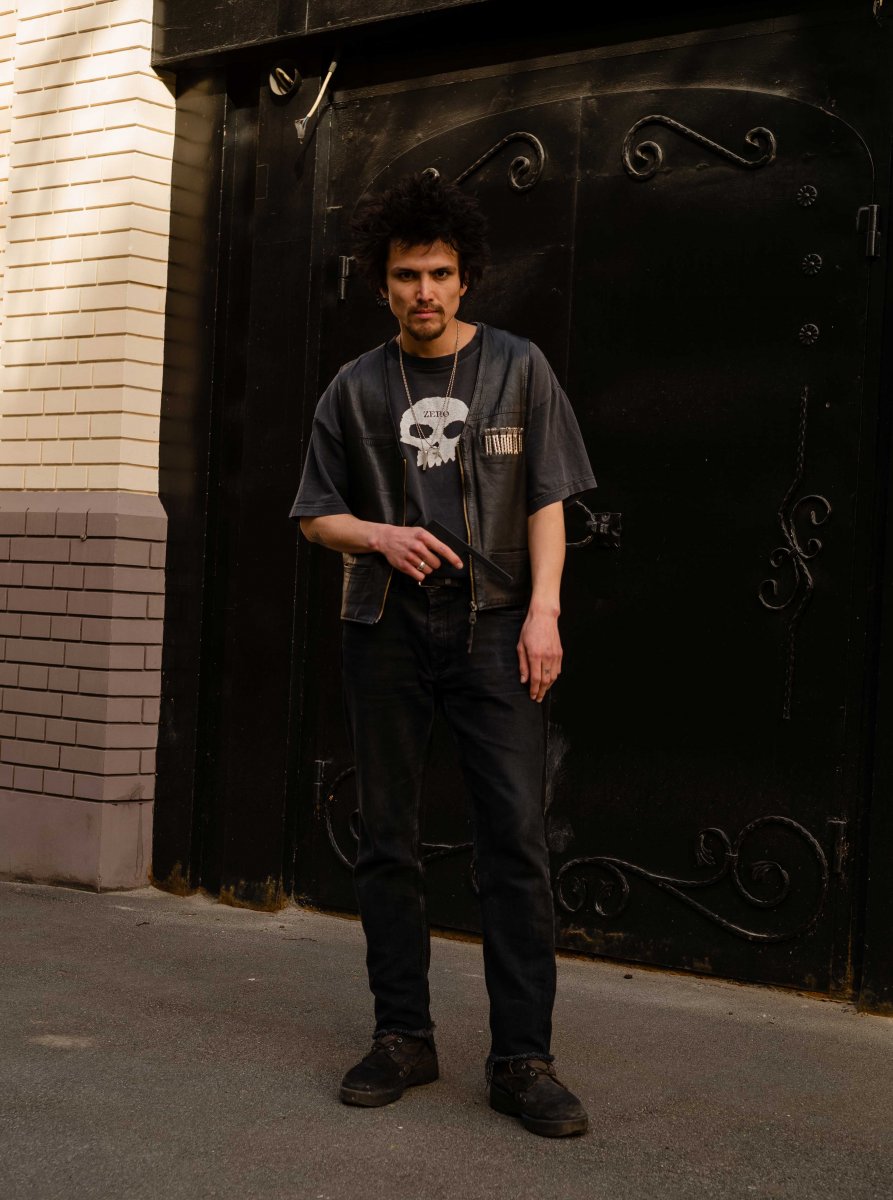
Reshat, a Kyiv based barber on his smoke break. Many barbers offer free haircuts to soldiers and volunteers. Reshat also launched a label in response to the ongoing war. (@pieceofshirttt)
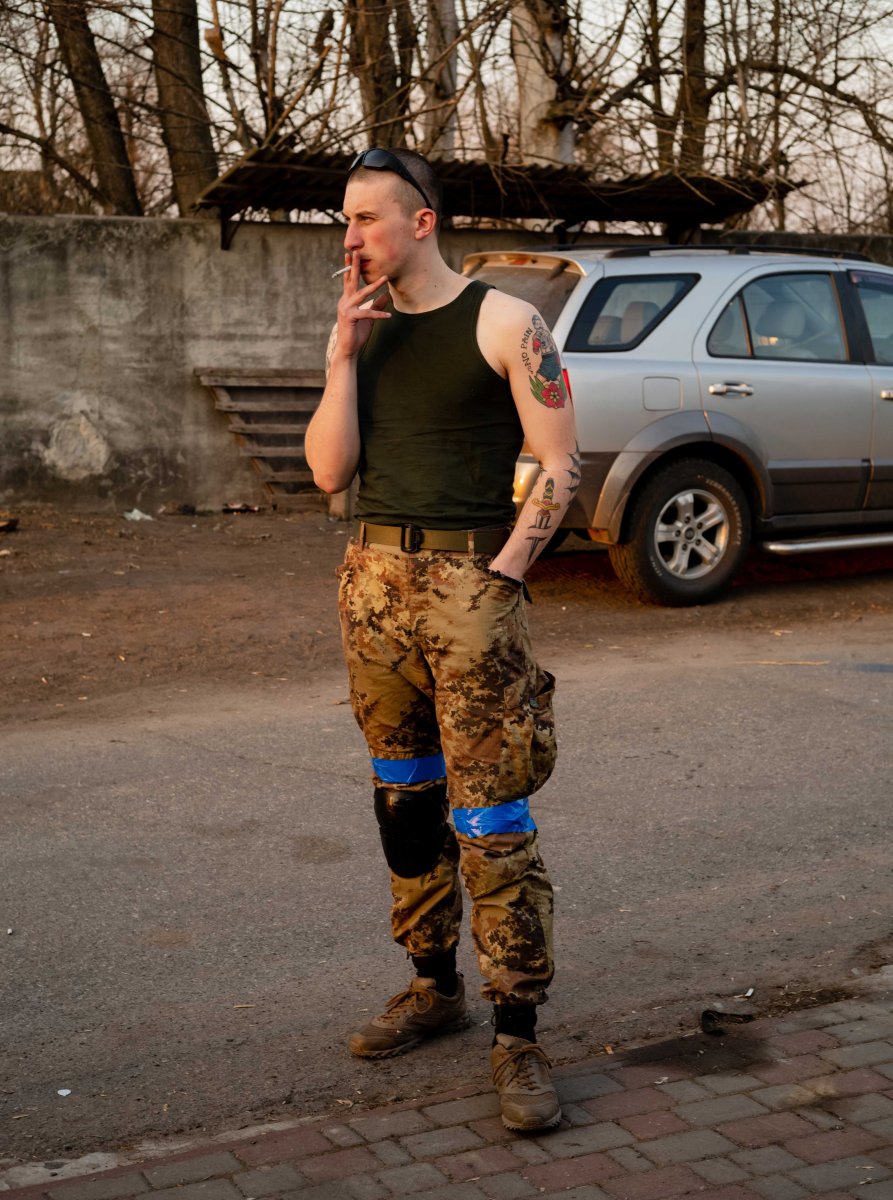
19 year old “Skin” takes a smoke break after returning from his first battle on the eastern outskirts of Kyiv Oblast.
By the second month the war had taken an inexplicable turn: Russia was being turned back, and in their wake untold horrors of the occupation unveiled. The shock of victory was hand in hand with the sobering cost of war as casualties mounted. Graveyards expanded to the edge of trenched fighting positions. Injured soldiers came home and felt as strange out of uniform as they had a month before wearing them for the first time. The ban on drinking was lifted. Teenagers left their basements and bomb shelters for the first time in weeks and stumbled into the sun.
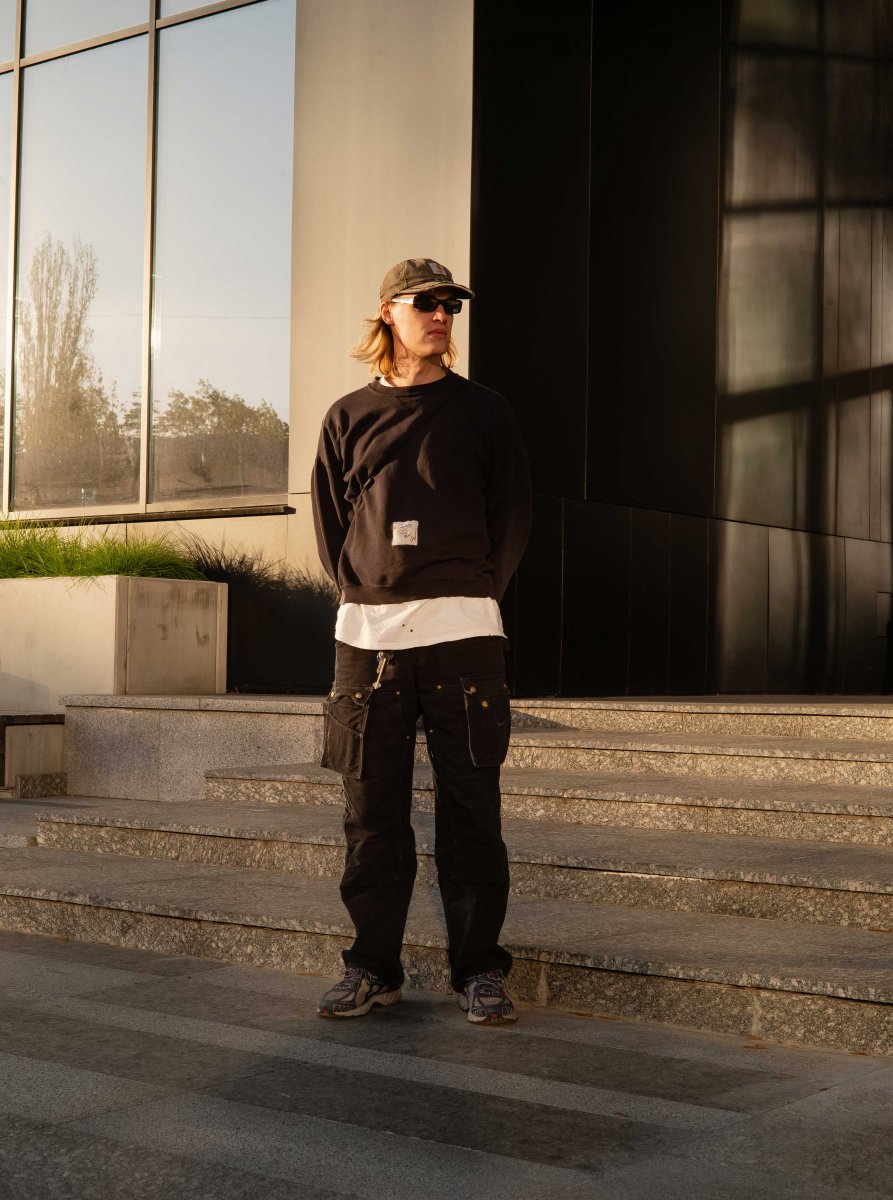
Dmytro Tsey is a Kyiv based tattoo artist. (@dtsey)
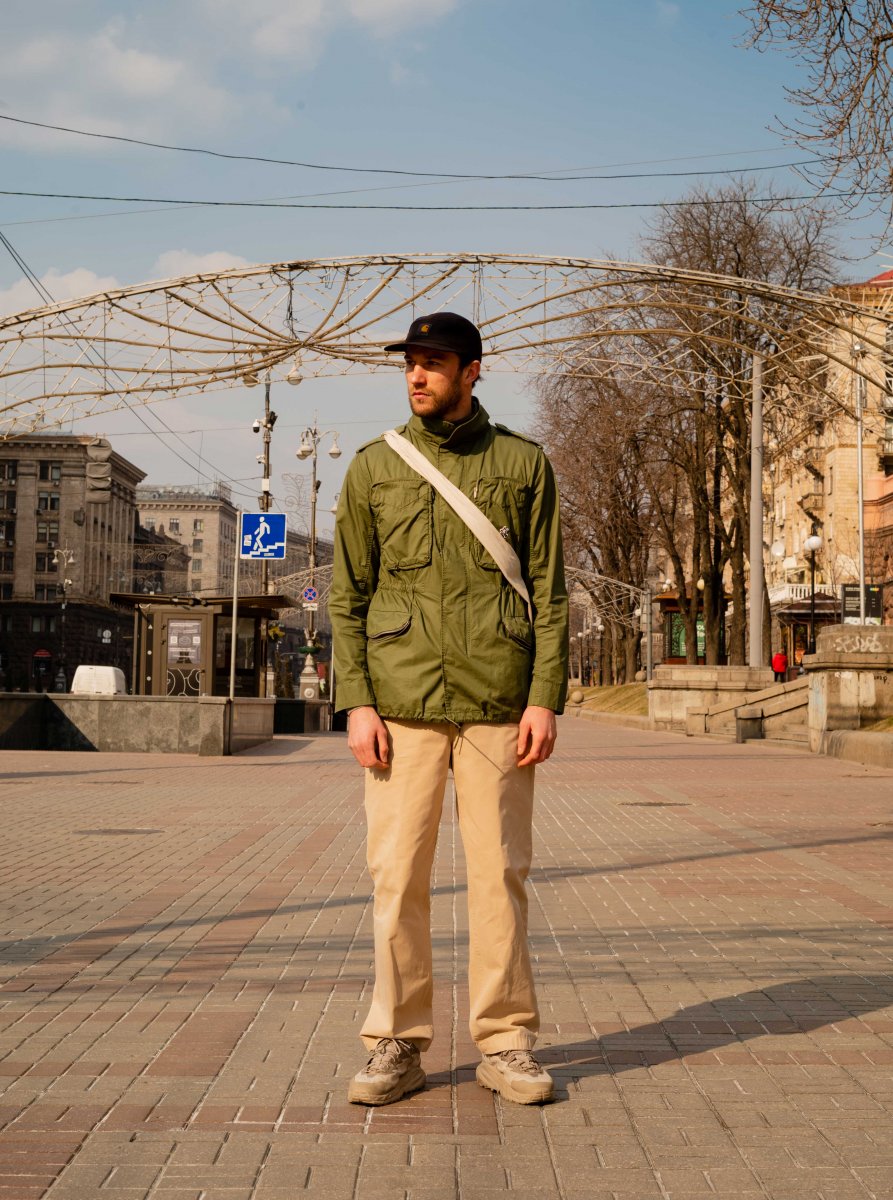
Khreshchatyk Street is the main street of Kyiv and was once Kyiv’s busiest shopping district; now empty. The few men walking by have all adopted a military style.
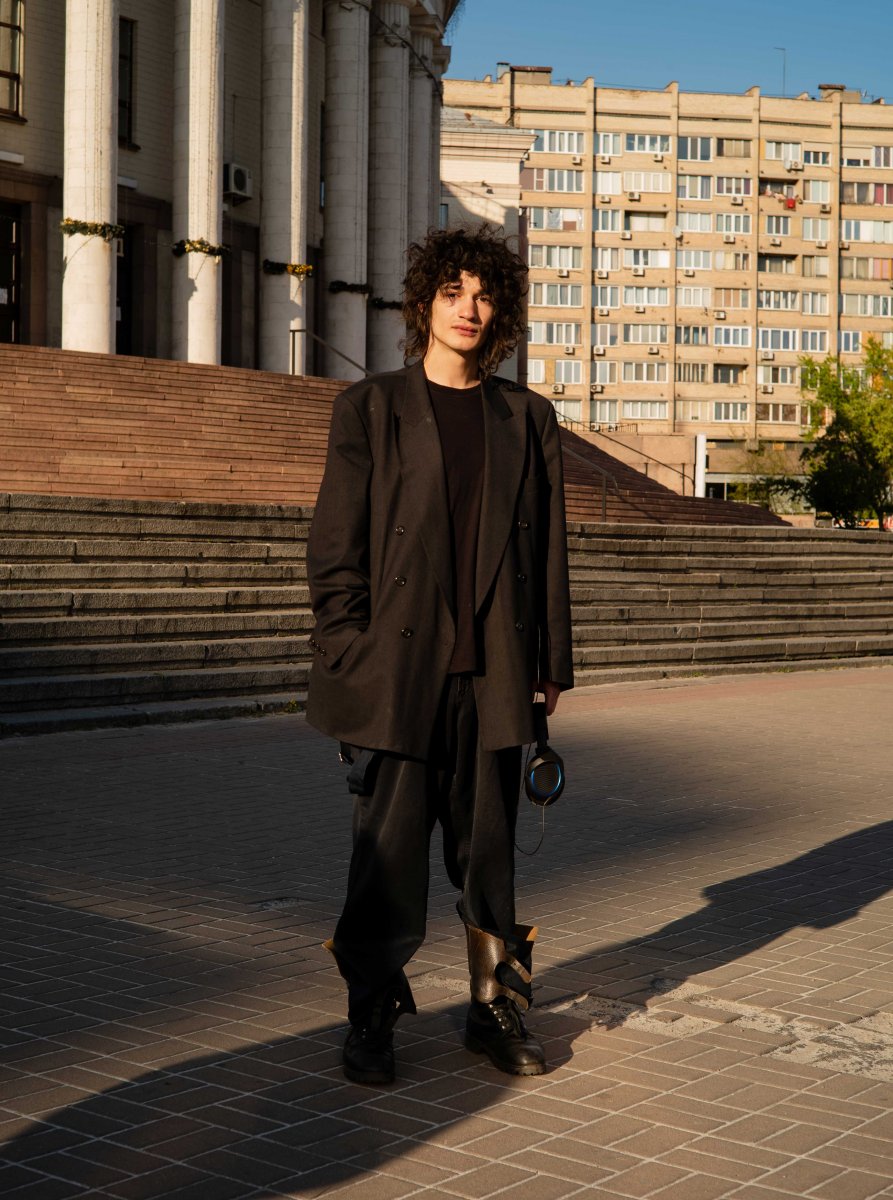
A young Kyivan ventures outside in early May, it’s his first time going out in over a month.
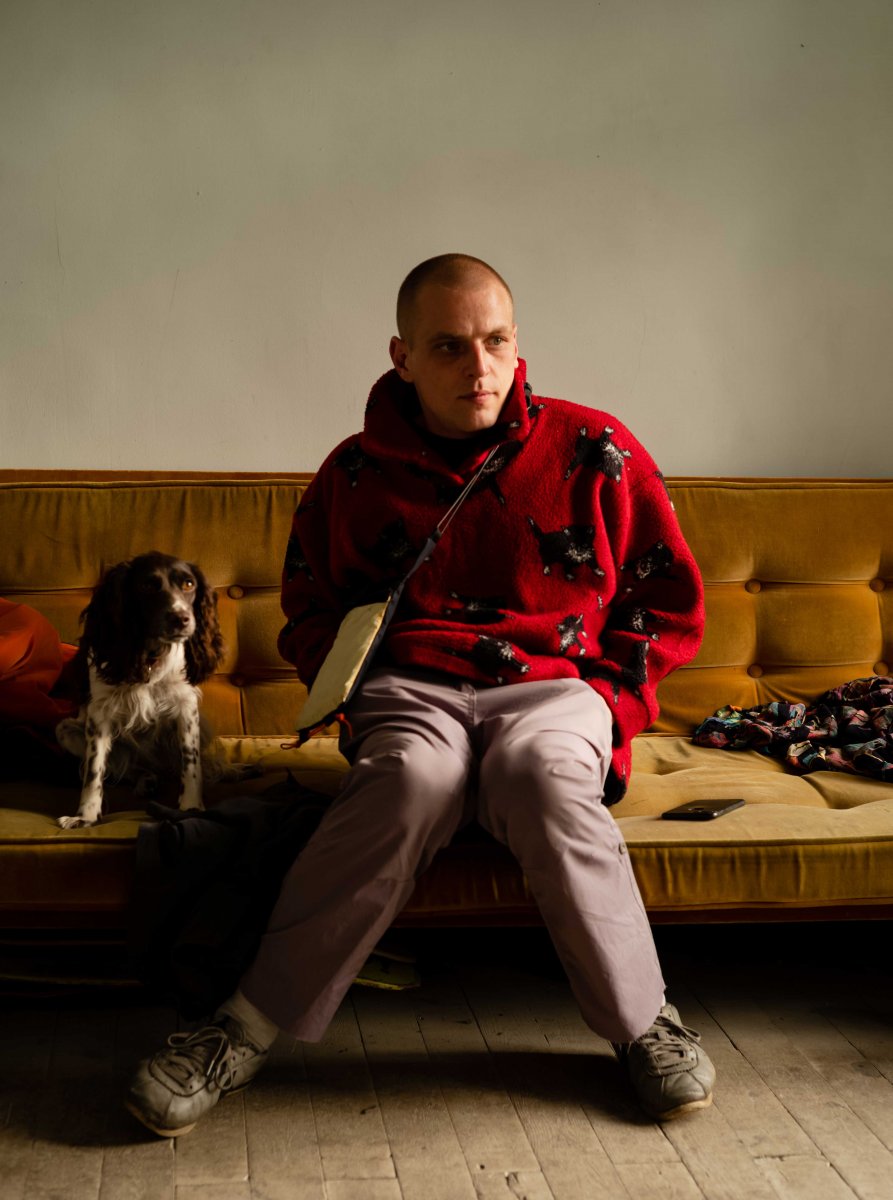
Aleksei Gots is a Kyiv based photographer. (@aleksei.gots)
By the third month Ukraine was making a bitter offensive, fighting shifted to the north-east and south. Kyiv settled into a wartime rhythm. Russia stepped up missile attacks bringing daily bombardments into the heart of the city, closer and with greater destruction than before. When people emerged from the burning ruins of their homes they came out bloodied, but with fully packed bags. Young women in immaculate camel coats and pleated navy skirts walked arm in arm with returning soldiers, some fumbling with new aluminum crutches.”
-Robert Spangle, California, December 2022
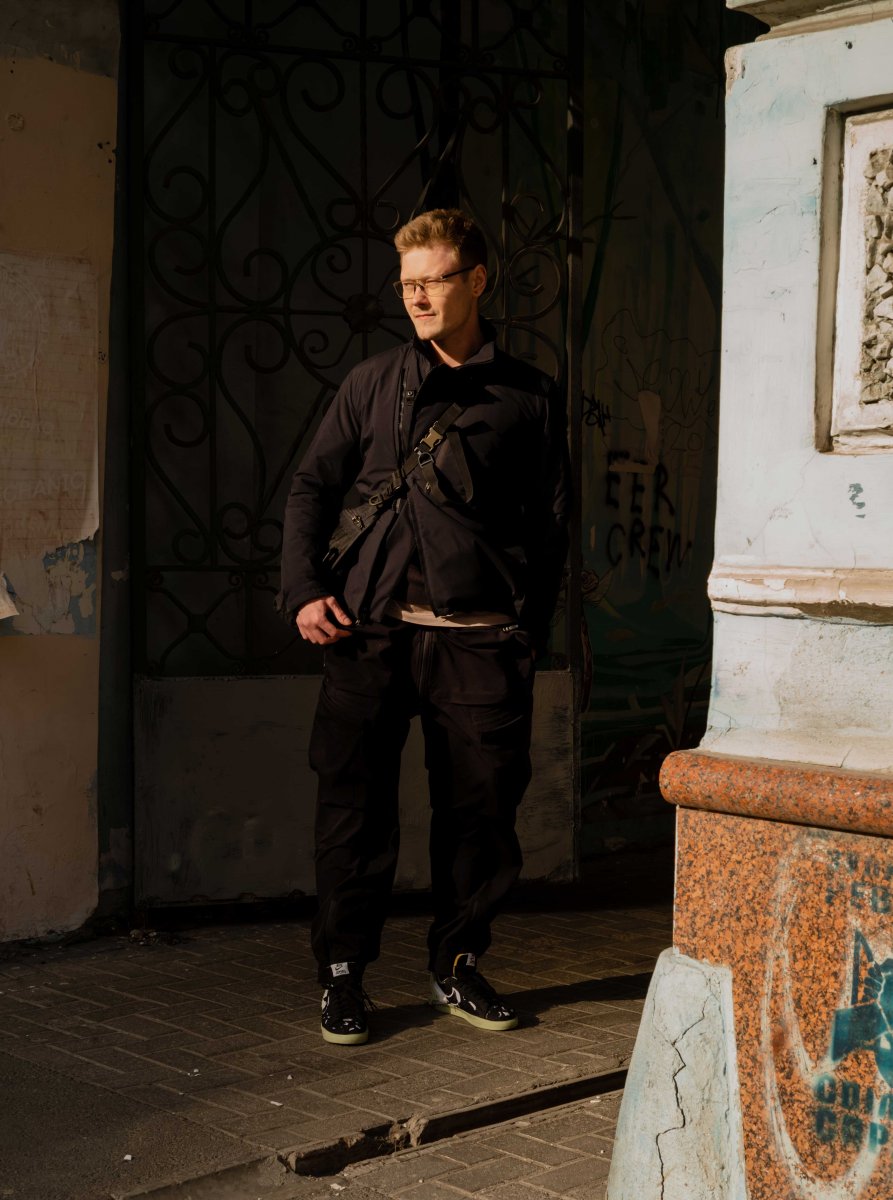
Oleh Luferenko moved to Kyiv once Russian forces began to actively bomb his hometown. I noticed his Acronym jacket, pants and bag on the streets of Kyiv, a style that was once a conspicuous fashion statement looks much more natural in a contemporary war zone. (@pbzhll)
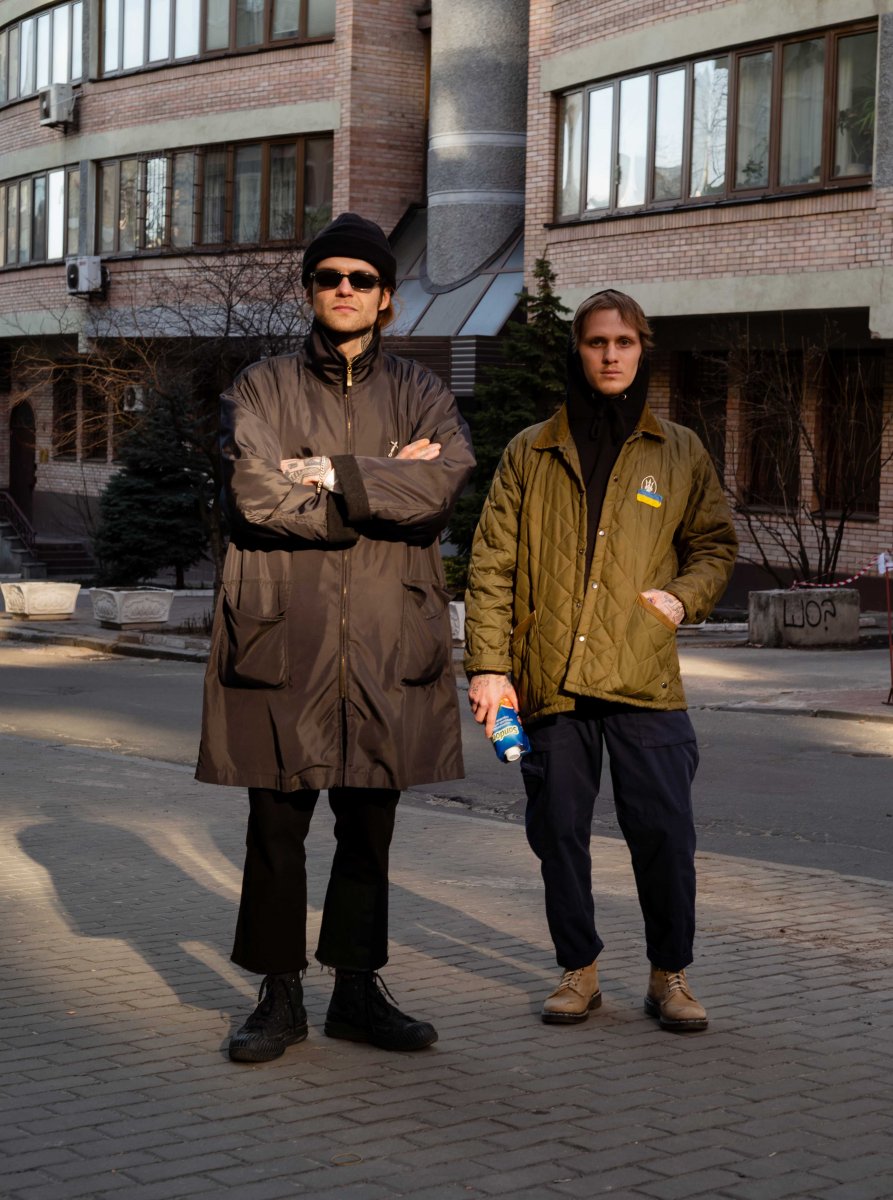
Dima here on the left is a Kyiv based tattoo artist who stayed in Kyiv and continued to tattoo through the initial months of the war. (@dima.melancholiac)
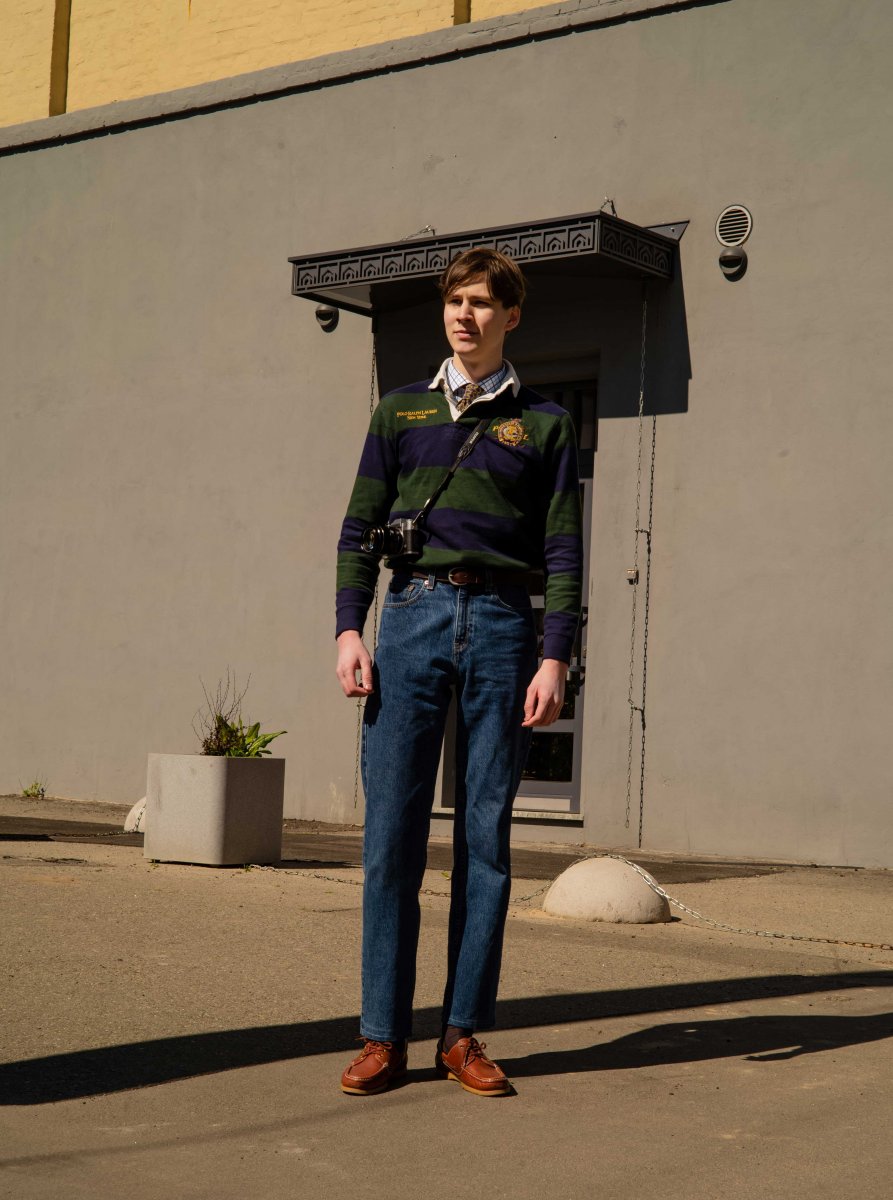
Konstantin Shrubenko is an engineering student whose studies were stopped by the invasion. This was his first time going outside since fleeing to Kyiv at the start of the war. He was photographing his favorite buildings, out of fear they will be destroyed by Russian attacks on May Day. (@konstantin_shrubenko)
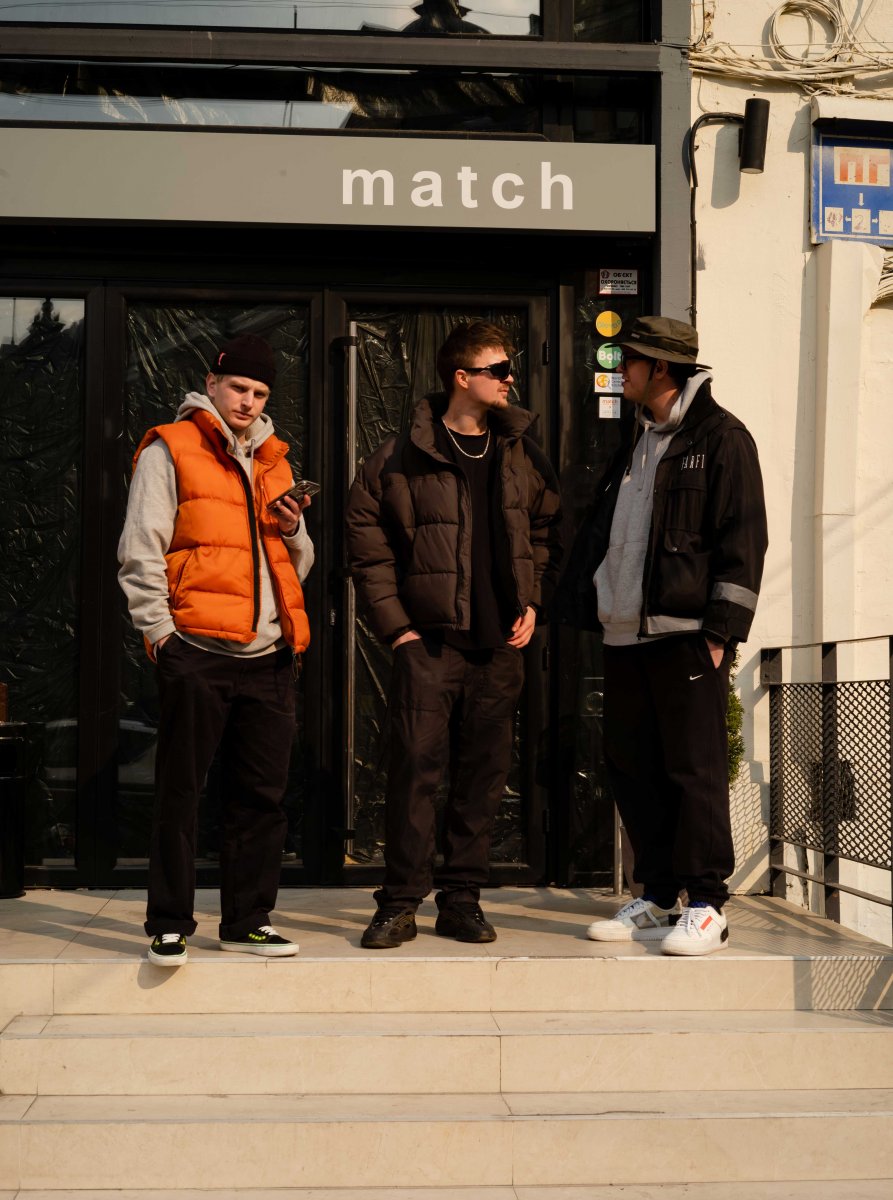
The employees of the popular cafe Match converted their shop into a support station for the Ukrainian military, preparing meals and aid-packages with the help of local restaurants.
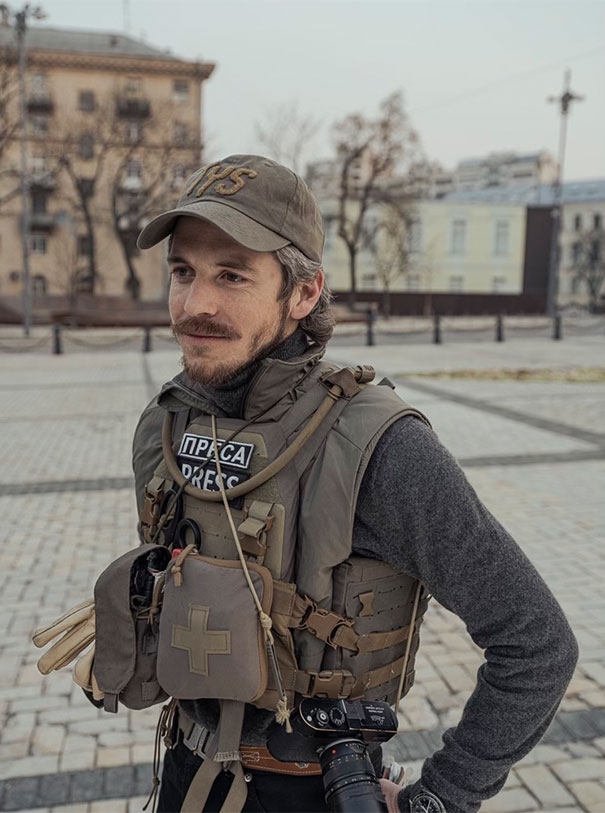
Robert Spangle photographed by Sasha Maslow (@maslovsaslov)