Copenhagen Fashion Week F/W 2024 Highlights Part 2
It’s about responsibility versus sustainability
February 5, 2024
Here are a few of our favorite shows from past week as seen by our co-editor in chief Nicole Urbschat.
Stine Goya
If there is a queen of prints and colors in Denmark, Stine Goya is the name of the game. The designer who has been one of the leading personas in Scandi Fashion since 2006 is even beloved by celebrities ranging from Kendall Jenner to Michelle Obama.
For her F/W 2024 collection Goya invited guests to her atelier in a beautiful Rococo-style townhouse filled with boxes of buttons, well-placed sewing machines, and sublime art works by Copenhagen’s David Risley Gallery. The show began with a recorded voice of Stine Goya declaring her manifesto on colors.
Out came a collection of, well, almost non-colors that reminded the audience that color does not need to scream to have effect. Soft pink and buttermilk as well as the prints featuring an ink-drawn winding staircase were inspired by the rooms in her atelier and stood out.
The clothes on the runway seemed less girly than in former seasons, hence no typical Goya puff sleeve dresses or blouses in sight, instead the designer offered some tailored pieces with a personal twist, like a pinstripe skirt with a floral print sneaking through. A sign for the designer’s evolution to a more sophisticated, grown-up look that might make it easier for the brand to expand globally.
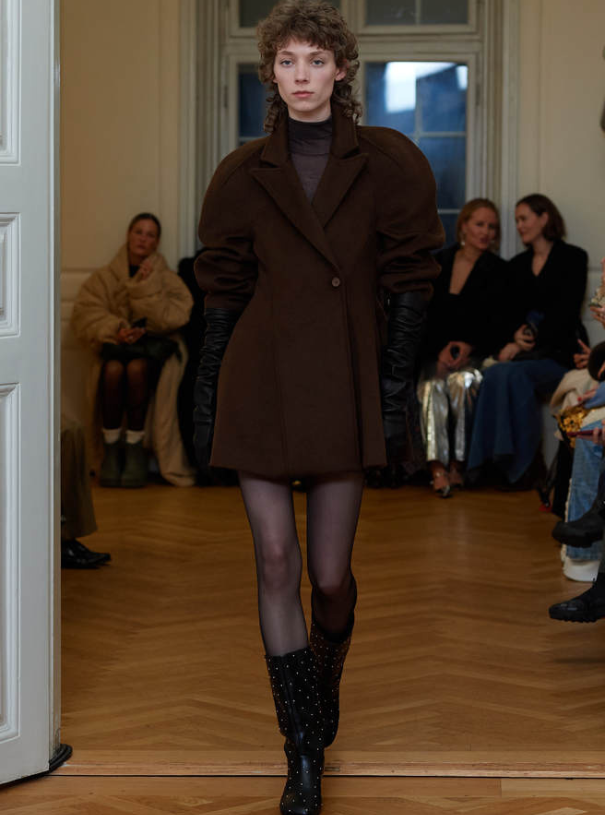
Best look: A brown structured two-in-one blazer and shirt
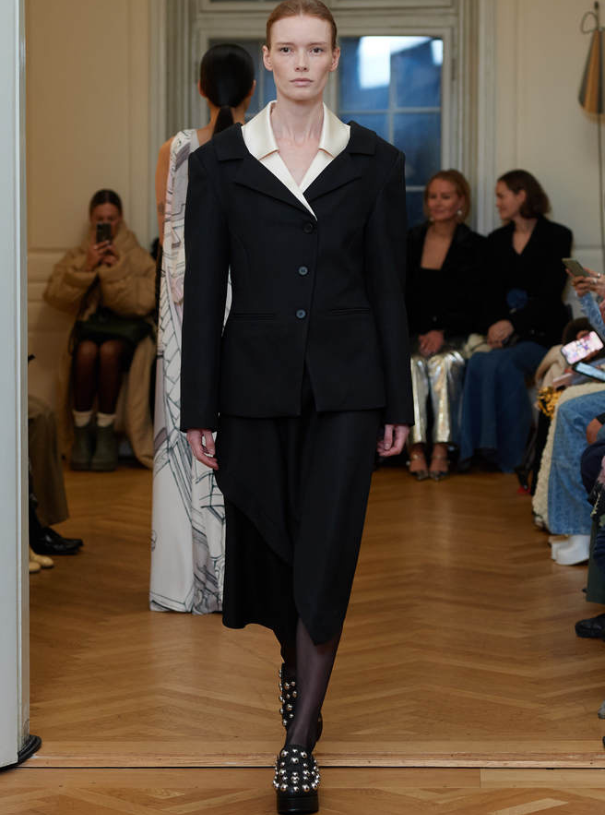
Accessories crush: The brand’s DNA clog with exaggerated silver studs, made of apple leather (as the bags), which is produced by the leftover pomace and peel from the fruit juice industry
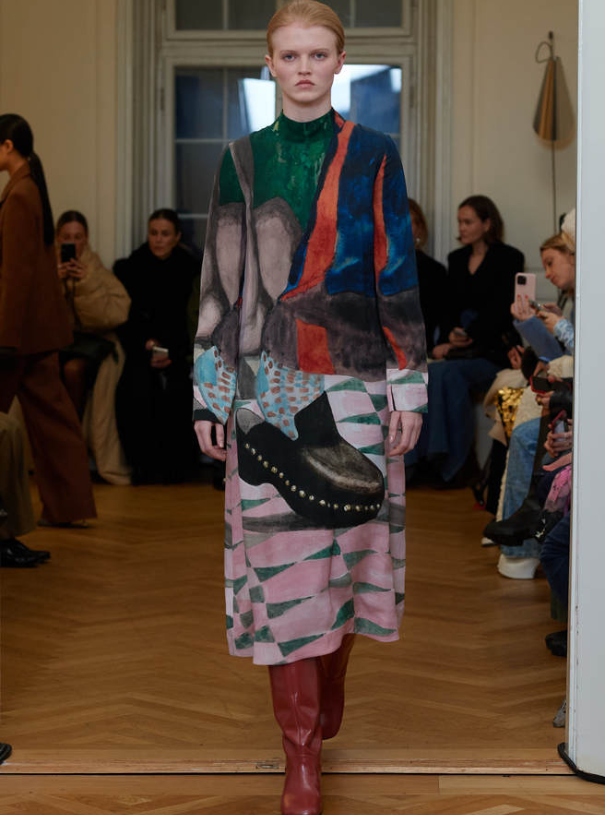
Beyond fashion: The paintings in the venue featured Goya’s team from seamstresses to pattern makers explaining their own take on colors with little notes
Henrik Vibskov
Simply describing Vibskov as a fashion designer would not do him any justice. The multidisciplinary artist expresses himself through costume and set design, installations, art, fashion, and every form of creativity that lets him break away from the ordinary. He even plays the drums in a band.
For years Henrik Vibskov has been the King of Copenhagen as one could also easily notice from the size of the crowd at his latest show. His F/W 2024 collection reflected on therapy sessions meaning the things we do to catch a break from our daily (digital) life. An inspiration on point, given the fact that even fashion has woken up to mental health issues recently.
In fact, thanks to the dancers, all dressed in Vibskov inflatable costumes for the upcoming theater piece “Flammenwerfer” in Malmö, the show itself often felt like a moment of dreamlike escape in an otherwise busy fashion week.
The collection featured some of Vibskov’s great signature styles like coats and jackets in a houndstooth grid or black denim. And Flannel-like plaid suits that evoked a kind of cozy pajama feeling, showing the designer’s strength in menswear and that maybe fashion that makes you feel good, can be a bit like wardrobe therapy.
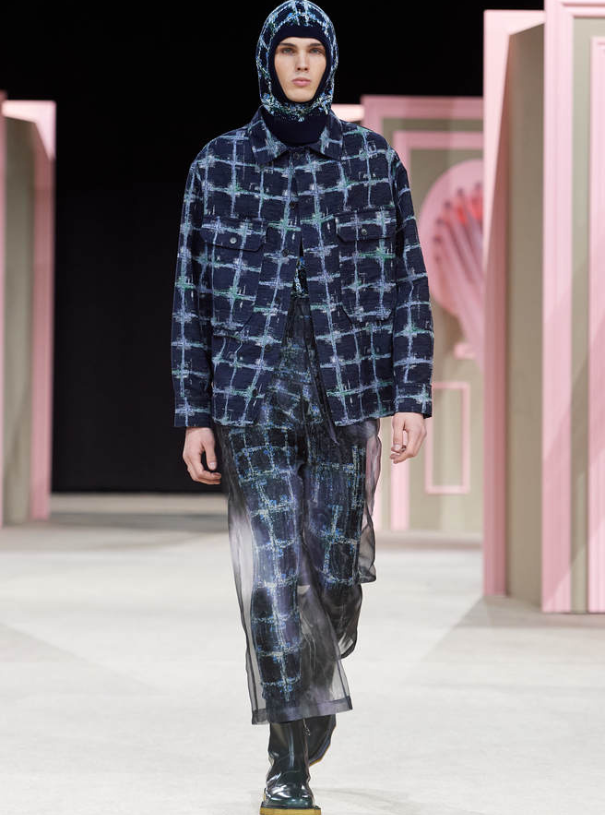
Look pick: Print dresses and men’s suits contrasting sheer layers and heavy fabrics
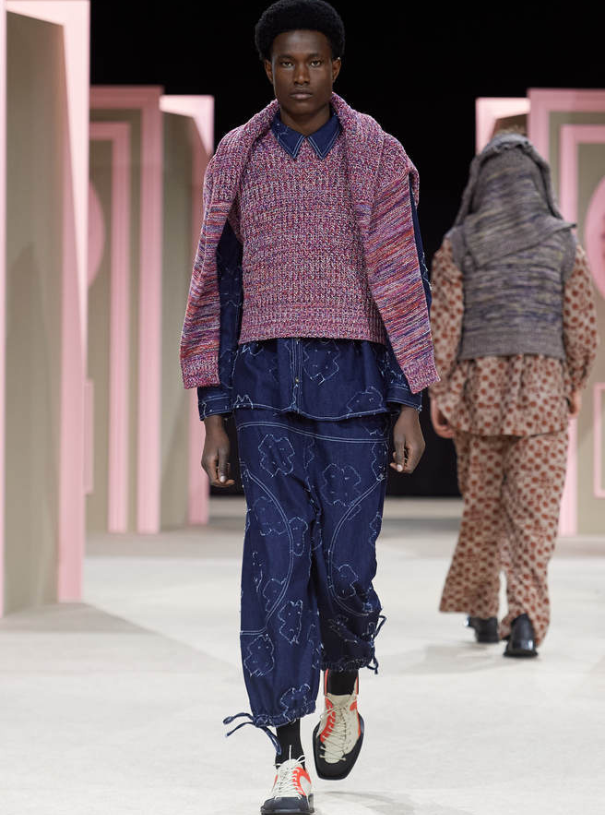
Fun fact: Henrik Vibskov’s own personal daily therapy fix: chewing gum, which inspired the lengthy rose tubes of the installation
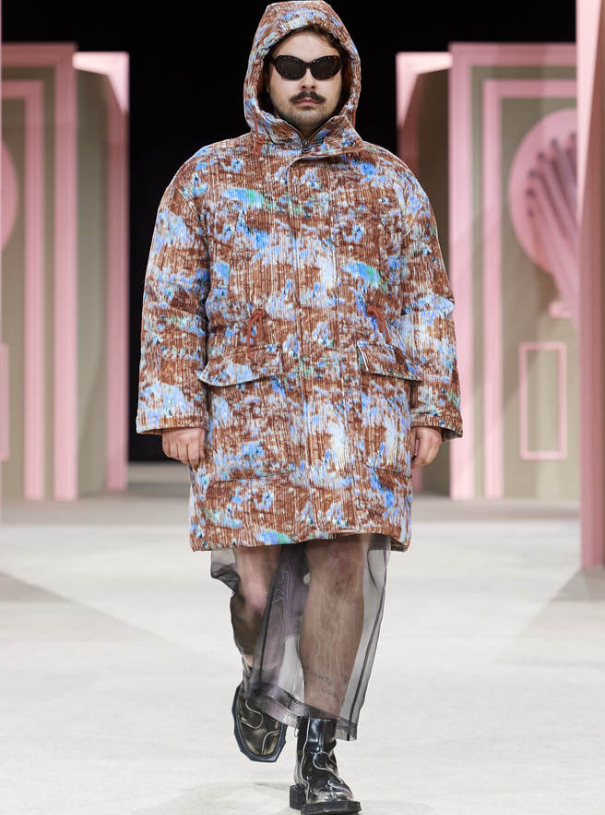
Worth to notice: Finally, a plus-size male model on the runway – after Milan and Paris presented a rather muscle-packed superhero take on masculinity
Baum & Pferdgarten
Here is another thing which is worth mentioning about Danish fashion: in a business where all the top-notch jobs are now owned by men (at Kering, the second-largest fashion conglomerate in the world, every designer in the stable is in fact a white man), a lot of Danish designers and founders are women. Case in point, Rikke Baumgarten and Helle Hestehave started their label back in 1999, when there wasn’t such thing as the typical Scandi streetstyle look.
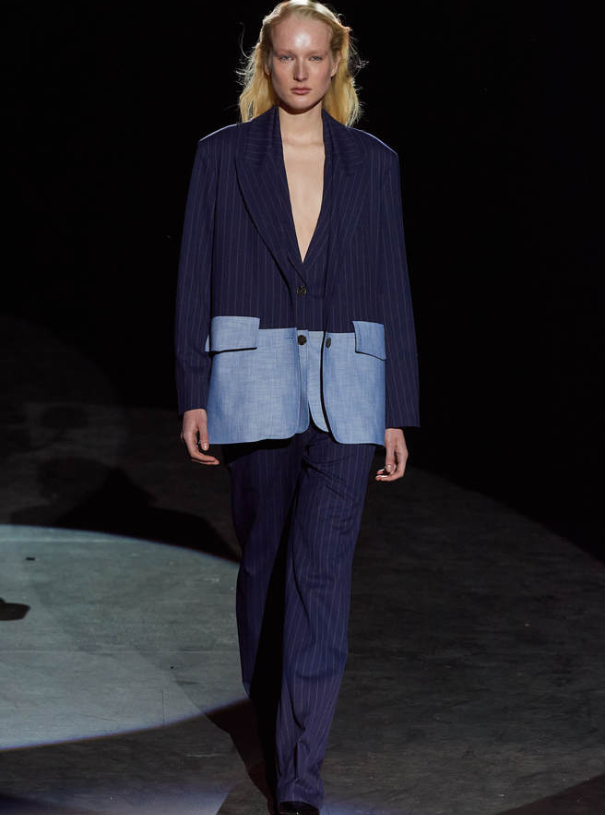
For this season the duo celebrated its 25th anniversary with several updated core pieces like a double-breasted coat with a new zebra print. Classic pinstripe blazers were combined with more deconstructed denim. Embellished shirt minidresses paired with utilitarian nylon hoodies. On the runway the collection at some point felt a little bit all over the place. Plus, the tailored mini-skirts, although in a good way, injected too much of a Miu Miu note, but there were some good pieces like a blue workwear coat with contrast-stitching and red faux leather collar that showed why Baum & Pferdgarten’s individualistic design vernacular is having a wide fanbase since 1999.
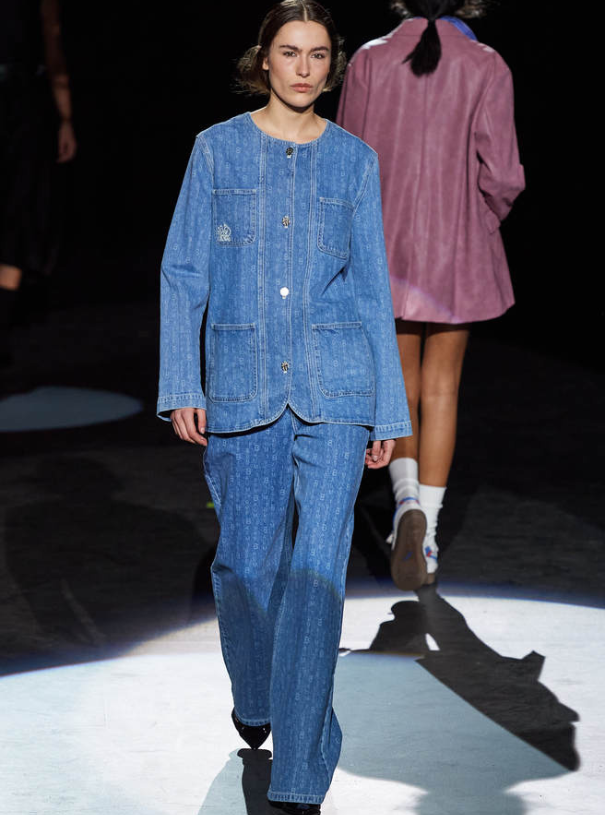
Look pick: The relaxed monogram-denim suit with silver buttons
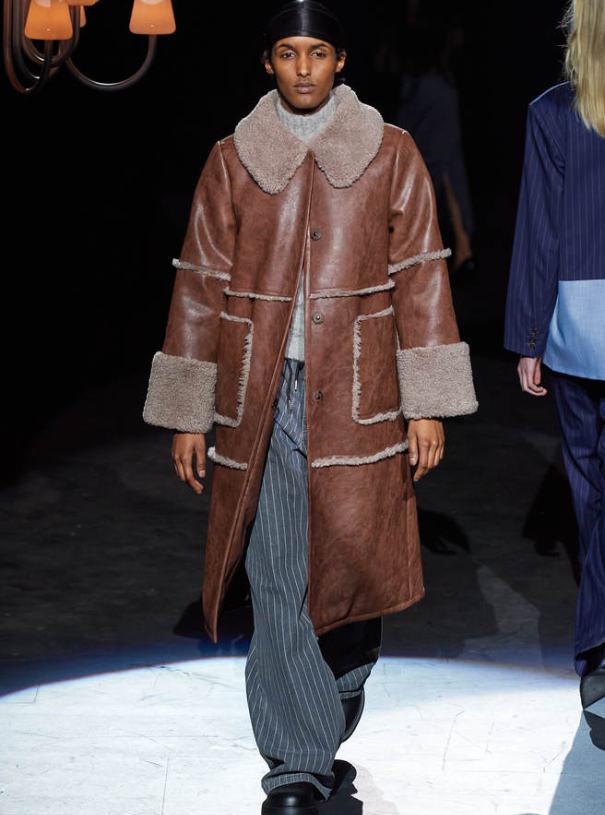
Worth to notice: The casting. Done by Camilla Bigler Beadsworth it featured some of the best diverse faces of the week
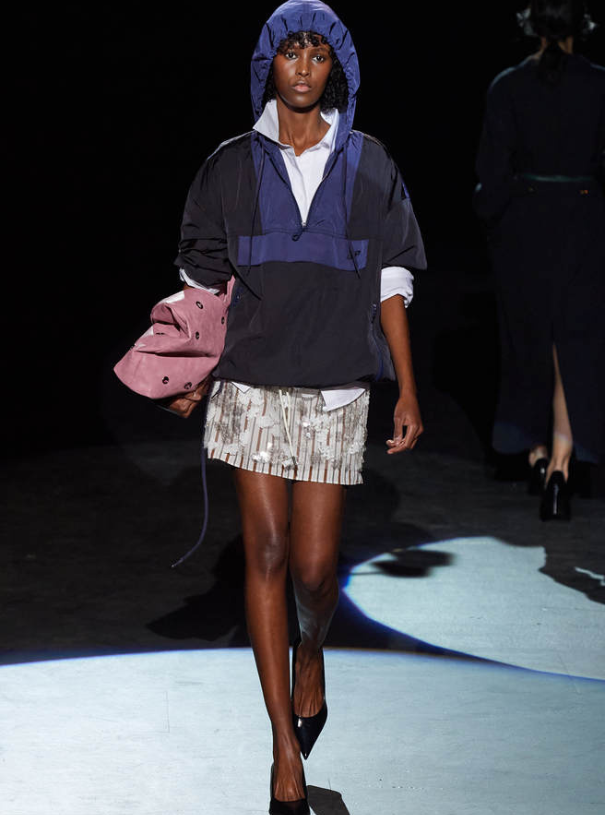
Inspiration: Shirting, tailoring, disruptive, sexy and sport elements
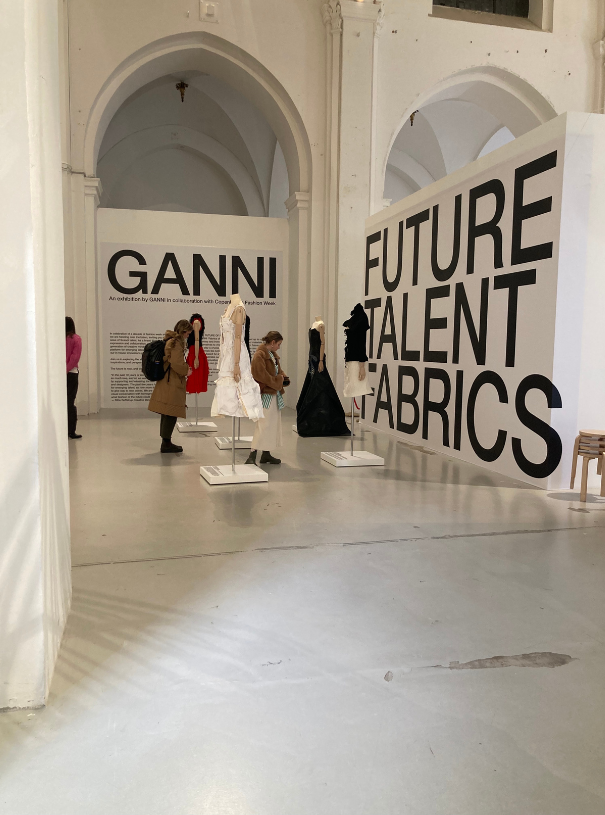
Ganni: Future, Talent, Fabric Exhibition
Can fashion even be sustainable? Claiming that the core of fashion is consumption, the Danish powerhouse brand Ganni prefers the label “responsibility” over “sustainability”, leading the pack of companies that redefine a term that seems indeed to be a contradiction.
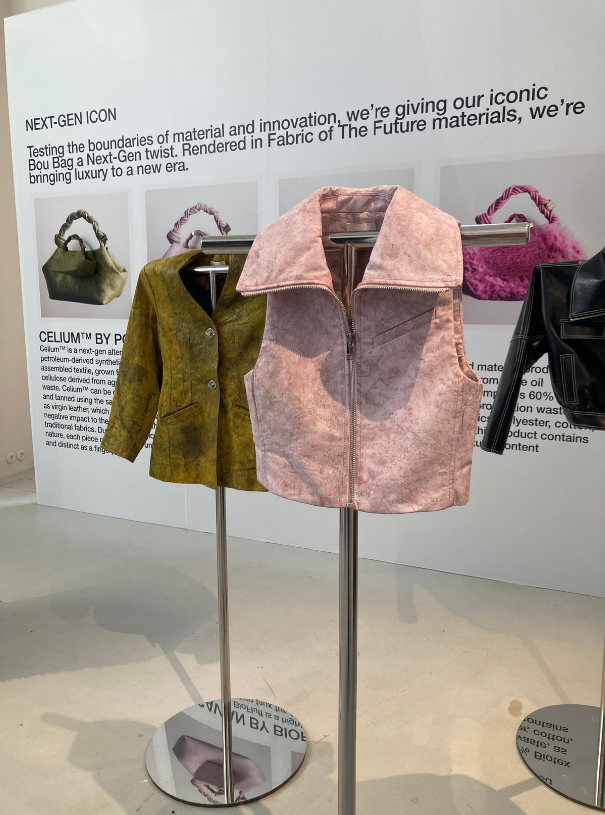
What does “responsibility” mean in Ganni’s world? Here are some facts: Not only did the brand phased out animal leather by the end of 2023 (a big move for a label selling a lot of footwear), but the Danes also aim to halve its total emissions by 2027 including the factories that produce their clothes and are not owned by Ganni. Already now 50% of the fabric composition is certified recycled, lower-impact, or organic; plus, the brand also holds its own in-house platform “Fabrics of the Future” to develop innovative fabrics.
So instead of celebrating her ten years at Copenhagen Fashion Week with a big bash, Creative Director Ditte Reffstrup opted to turn the spotlight on the new wave of Scandi talents like Nicklas Skovgaard or Alectra Rothschild/Masculina who were invited to show looks created with these future fabrics in an exhibition. Materials like Savian by BioFluff, using nettle, hem, and flax, 50% of which can be sourced from agricultural waste, to create next-generation faux fur. Or Oleatex, a biobased material using waste streams from olive oil production and recycled plastics as an alternative to leather.
Given the fact that the past years have not seen likeable conditions for emerging talents with a sustainable approach, which costs money, this Ganni move feels trailblazing.
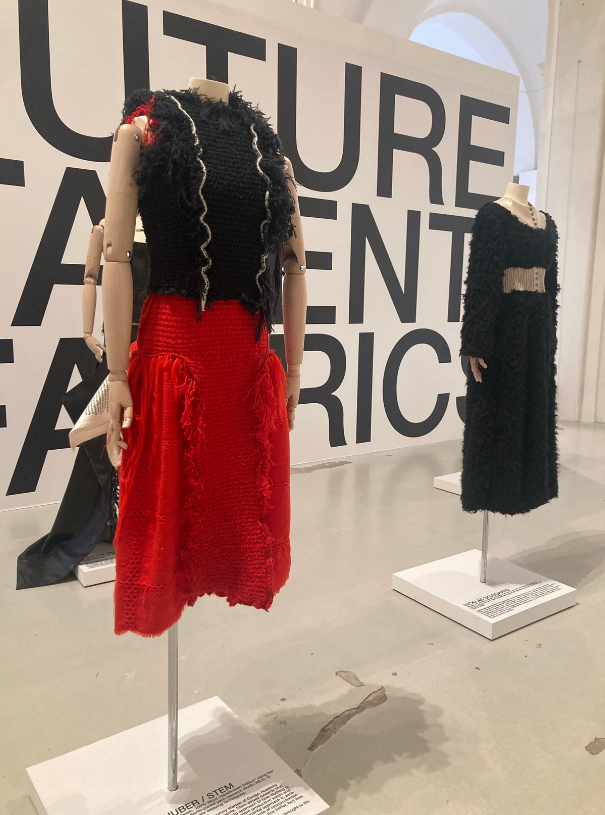
Ganni Fabric Exhibition